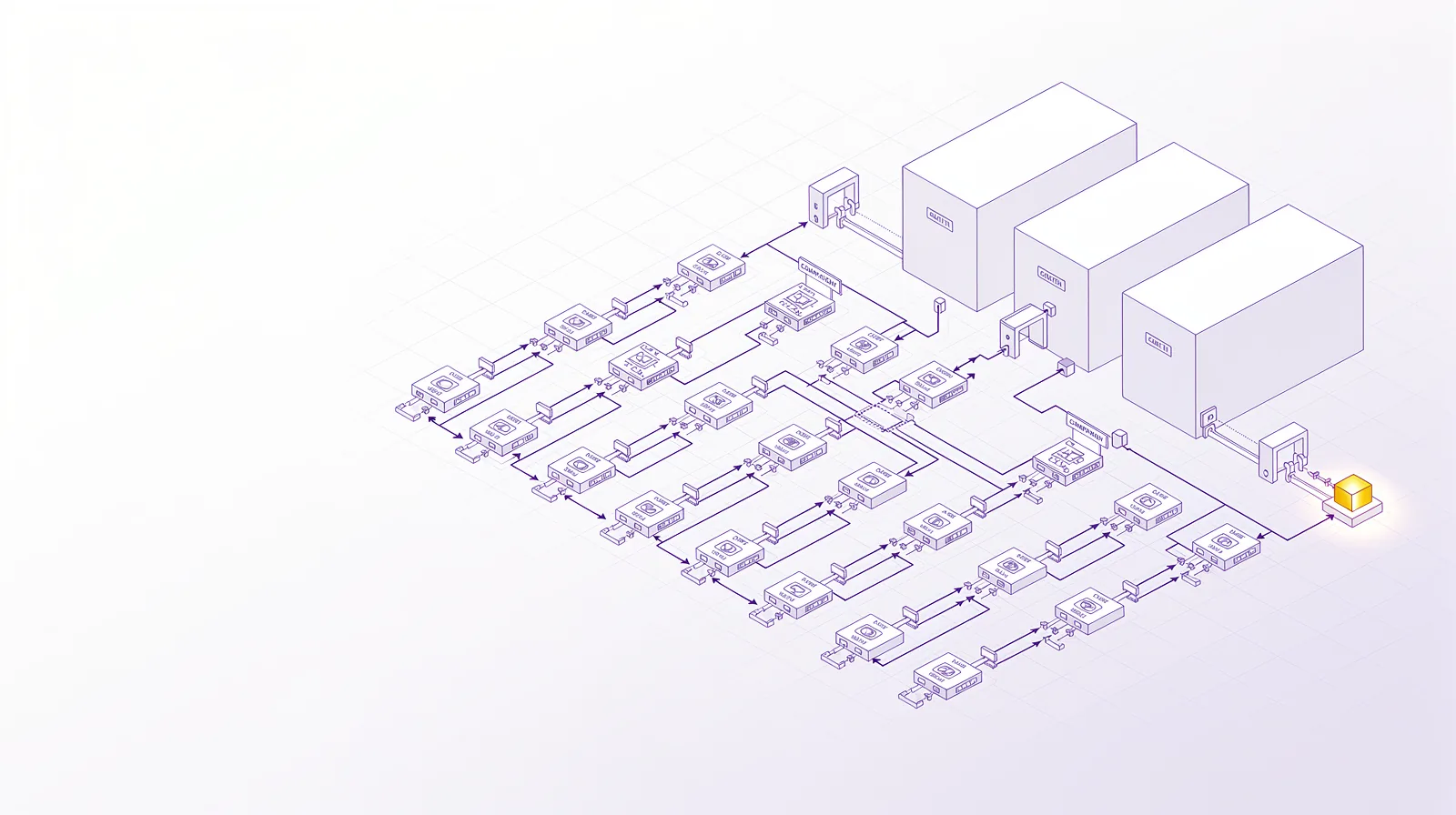
Most B2B marketing teams hit the same wall: campaigns take months, and most of that time is handoffs. The way through starts with the unglamorous part. First, standardize. Write an operating model with five stages, each with one owner, one handoff artifact and one gate you must clear before moving on. No artifact, no handoff. Split messaging into three tiers (locked, flexed and free) so everyone knows exactly what they can change, and measure the process itself, not just the campaigns. Second, automate. Once the process is written down, every step can run as a workflow. I use n8n. Briefs, adaptations, build checklists, launches and reports become workflows instead of meetings. Third, go agentic. When the process runs as software, the unit of work shrinks. You can define a very small audience from internal and external signals and have a campaign built to target it in minutes rather than months, without burning the team’s time on campaign assembly. The gates stay, but they become permissions: what an agent may use as-is, what it may adapt, and what a human must approve. None of this depends on one company or one stack. In my most recent role it produced 28% more pipeline per program dollar, year over year. To show what it can do for any B2B team, the model below runs the math on public benchmarks and assumptions you can see and change. It is an illustrative model, not client results.
Act 1 · The operating model
Standardize
Ad hoc handoffs were slowing campaigns and muddling messaging. The fix was a five-stage lifecycle: Strategic Brief, Adaptation, Build and Produce, Launch and Execute, Report and Learn. Each stage has one owner, one required handoff artifact and one gate. Add clear decision rights ("centralize strategy, distribute execution"), three messaging tiers, a fixed operating rhythm, process metrics, and a rule to iterate rather than carve anything in stone.
- Stage 1Strategic Brief Gate 1
- Stage 2Adaptation Gate 2
- Stage 3Build and Produce Gate 3
- Stage 4Launch and Execute Gate 4
- Stage 5Report and Learn Gate 5
Act 2 · Every step in n8n
Automate
Once the process was explicit, it could be encoded. Every stage became an n8n workflow: briefs became structured inputs, gates became automated checks, handoff artifacts were generated rather than written, and reporting ran itself.
- TriggerBrief submitted
- CheckGate: brief complete
- GenerateAdaptation artifact
- GenerateBuild checklist
- ActionLaunch
- ReportReport and learn
Act 3 · Signal-driven micro-segments
Agentic
With the process running as software, the unit of work shrank. Internal and external signals define very small audiences, and a campaign aimed at each one is generated and stood up in minutes rather than months, without burning the team's time on campaign assembly. The gates did not disappear; they became agent permissions.
- Signals in: internal + external
- Segment builder: micro-audiences
- Campaign generator: brief, assets, plan
- Guardrail tiers: Locked · Flexed · Free + approval
- Launch: channels, tracking
- Attribution: every opp to a channel
- Attribution feeds back to the Segment builder.
Gates become permissions
Messaging tier → agent permission
| Messaging tier | Human-era rule | Agent permission |
|---|---|---|
| Lockedpositioning, value props, compliance language | Use as-is; choose what to emphasize | Read-only: select and arrange approved blocks, never rewrite |
| Flexedheadlines, subject lines, ad and nurture copy | Adapt for context; keep the core argument | Generate variants inside constraints; a human approves or samples before launch |
| Freelocal activation and follow-up content | Create within brand guidelines; no approval | Create autonomously; automated brand and claim checks; logged |
Six principles
What makes it portable
- 01
No artifact, no handoff. Every stage produces one artifact and clears one gate. In software, the artifact is structured data and the gate is a check.
- 02
Centralize strategy, distribute execution. Humans own the "what" and "why"; the system handles the "how" and "where".
- 03
Guardrail tiers map to agent permissions.
- 04
Measure the process, not only the campaign: cycle time, adoption of the standard kit, gate compliance, retro completion, exception rate.
- 05
Iterate, don't carve in stone. The three-question retro (what worked, what didn't, what changes) applies to the system itself.
- 06
Standardize before you automate, and automate before you go agentic.
Results · cleared list only